
Kitchen Sink Corner Radius: R10, R15, or Sharp Corners?

KITCHEN SINK DETAILS · BUYING GUIDE
Kitchen Sink Corner Radius: R10, R15, or Sharp Corners?
A kitchen sink’s corner radius describes how tightly its interior surfaces curve together. A smaller radius creates a squarer-looking bowl; a larger radius creates a more rounded transition. For shoppers, the important questions are whether those corners suit your cleaning routine, cookware, and accessories—not whether one radius is universally “best.”
Start by checking the model’s stated radius and basin drawing. Then compare the complete bowl, including its material, usable dimensions, and installation requirements. Corner radius alone cannot tell you how easily a sink drains, how much it holds, or whether a replacement grid will fit.
What does kitchen sink corner radius actually mean?
Radius is the distance from the center of a circular curve to its edge. In sink descriptions, an R value identifies a curved corner rather than the overall width of the basin. It is not a steel gauge, a drain size, or a measure of countertop overhang.
The interior wall-to-wall corner and the transition from a wall to the basin floor are different parts of the bowl. A listing may not describe both. Product photographs can also make a modest curve look nearly square, particularly on a dark surface. Ask for a drawing or close-up if that detail affects your decision.
Is “zero radius” literally a guarantee of a perfect right angle?
Treat “zero radius” as a design description that needs model-specific clarification. It generally signals a sharp, squared interior appearance rather than a generous curve. Do not use the phrase alone to calculate accessory fit or to assume every transition in the basin has identical geometry.
R10, R15, and sharper corners: a practical comparison
| Corner style | What to expect visually | What to check before buying |
|---|---|---|
| Sharp or zero-radius style | More angular interior lines | How you will reach the joins when wiping; confirm the actual profile. |
| R10 | A tight curve that keeps a relatively squared look | Whether the floor transitions and accessory corners match your needs. |
| R15 | A slightly broader curve than R10 at the specified corner | The complete bowl dimensions, not just the radius number. |
| More generously rounded bowl | Softer, more curved interior shape | Space for flat cookware and the shape of any fitted grid. |
These are planning distinctions, not laboratory results. A comparison between different materials, bowl sizes, and finishes cannot isolate the effect of radius. Avoid choosing a sink based on an unsupported promise of a particular percentage reduction in cleaning time.
How corner shape affects everyday cleaning
A rounded transition can be easier to follow with a soft cloth than a sharply defined join. However, even a rounded sink needs attention where food residue, soap film, or mineral deposits collect. The material and approved cleaning method matter just as much as the corner shape.
Think about access, not a maintenance-free claim
Imagine wiping the back corners after washing a greasy pan. Can you reach around the faucet area, remove the bottom grid, and clean the entire basin? A large, smooth curve does not help much if accessories remain in place and hide the surface underneath.
Follow the care instructions for the selected model. Do not assume a cleaner suitable for stainless steel is also approved for a coated or composite surface. For routine wiping, start with the manufacturer’s recommended gentle method rather than choosing an abrasive tool simply because the corner looks difficult to reach.
Build sink cleaning into the end of your counter-cleaning routine. For a broader sequence, see Lordear’s guide to cleaning the kitchen in a practical order. This article focuses on choosing the bowl geometry, not replacing the material-specific care instructions.
Will a squarer bowl give you more usable space?
It can change how cookware sits near the corners, but the radius does not establish the usable capacity by itself. Interior length, width, depth, wall slope, and workstation ledges also affect the available room. Two sinks with the same exterior dimensions can have different interiors.
Check your largest cookware against the basin
Measure the pan or baking sheet you actually wash, including protruding handles where relevant. Compare it with the interior dimensions and the bowl shape. A top-view drawing is more useful than a lifestyle photograph for this step. If the pan sits diagonally, consider whether you can still turn it and reach the surface underneath.
Do not calculate a capacity advantage from a single corner-radius number. Unless the full geometry is available, any claimed gain would be an estimate with missing assumptions. A deeper or wider bowl may make a much larger practical difference than a small change in radius.
Corner radius also matters for sink grids
A bottom grid should sit securely on its intended feet without forcing its outer corners against the basin. Matching only the advertised sink width is not enough: the grid’s shape, dimensions, drain opening, and support positions all need to suit the actual basin.
For a workstation sink, distinguish the bottom grid from accessories that rest on an upper ledge. Their fit depends on different surfaces. Use the workstation sink accessories fit guide to check those dimensions separately. A shared R value does not make accessories interchangeable across models.
Two Lordear examples—and why they are not a controlled comparison
An R15 undermount example
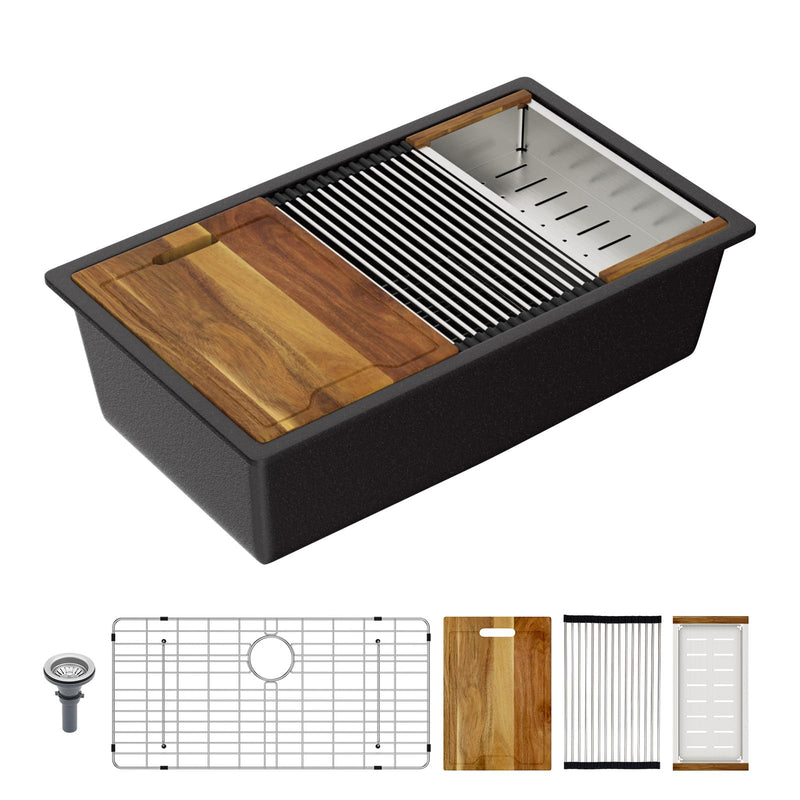
The Lordear 32-inch undermount single-bowl sink, model FBA-L-G2oB-USr32, lists granite composite construction and R15 corners. Its dimensions section gives an exterior size of 32 × 19 × 9.65 inches and a 35-inch minimum cabinet size. The nominal “9-inch” title is not the same as that detailed exterior-height value.
An R10 drop-in example
The Lordear 30-inch drop-in single-bowl composite sink lists R10 corners. Its dimensions section gives 30 × 22 × 9.65 inches overall and a 33-inch minimum cabinet size. The listing describes the material as quartz composite.
If you are keeping an undermount layout, start with the undermount sink collection. If the installation is still undecided, compare the broader kitchen sink collection before narrowing the choice by corner shape.
A short before-you-buy checklist
- Identify which interior corner the R value describes.
- Review close-up images and the current basin drawing.
- Compare usable interior dimensions with your cookware.
- Check approved care instructions and access beneath accessories.
- Confirm the exact grid or workstation accessory compatibility.
- Verify cabinet requirements and installation details independently of radius.
Frequently asked questions
Is R15 better than R10?
Not universally. R15 describes a broader curve at the specified corner. Decide using the full basin shape, cleaning access, cookware fit, and installation constraints.
Do rounded corners guarantee better drainage?
No. Drainage also depends on the floor design, outlet arrangement, installation, and plumbing. A corner-radius specification alone does not establish drainage performance.
Can I use any grid with the same corner radius?
No. Overall grid dimensions, feet, drain location, and the basin floor profile must also match. Use an accessory approved for the exact model or confirm the complete measurements.
Should I replace a sink just because its corners are difficult to clean?
First review the approved care method and remove accessories to check cleaning access. Replacement should consider the entire installation and your daily needs, not one difficult corner alone.
Conclusion: choose a shape you can live with
Kitchen sink corner radius is a useful detail, but it is only one part of the decision. Compare the actual bowl, your cookware, and the accessories you plan to use. Then confirm the drawing and cabinet fit before buying.
Ready to narrow your shortlist?
Save two suitable sink models and compare their interior drawings side by side. If a radius or dimension is unclear, ask Lordear for the current model specifications before ordering or arranging countertop work.